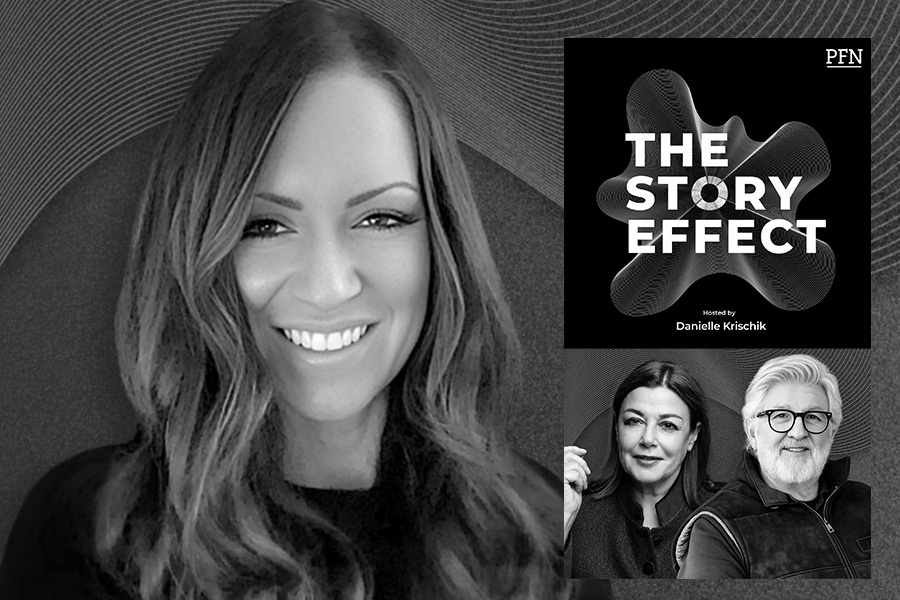
Danielle Krischik understands the power of communication. In her work as executive adviser and partner at U.S. marketing firm Knight Agency, she draws on the power of human connection, especially through storytelling, to help build businesses and drive performance. She also hosts The Story Effect, an award-winning podcast that examines how leaders of all kinds—and especially those in the business world—communicate and connect with others around them to bring success.
In her podcast, Danielle dives deep. Instead of merely considering facts at surface level, she discusses the emotions behind them and looks at how leaders convey their messages effectively to take others with them on their journeys. She hopes that what those leaders reveal will help listeners evaluate their own stories, gain inspiration, and understand that in whatever difficulties they may face, they are not alone.
LifeBook Memoirs meets The Story Effect
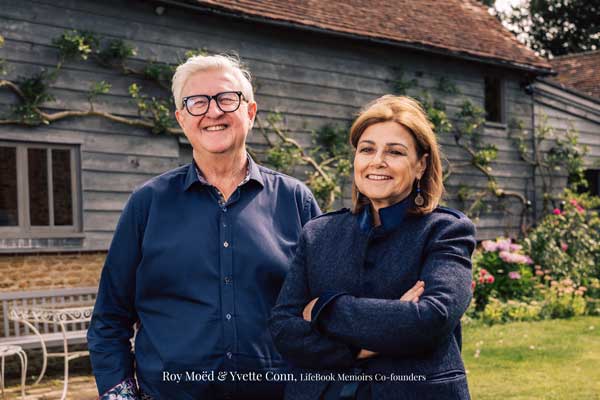
With this in mind, LifeBook Memoirs co-founders Roy Moëd and Yvette Conn recently joined Danielle for an episode of The Story Effect. Of course, it was particularly relevant for them because LifeBook Memoirs, as well as being a business, is fundamentally about stories. Not wanting Roy and Yvette to escape too easily, Danielle started by quizzing them about their own personal stories and how LifeBook Memoirs came into being. Interestingly, Roy and Yvette revealed that the best way for a married couple to work together is by ensuring that each person has a separate and distinct role.
Ultimately, the discussion was all about the power of storytelling. As Yvette explained, the essence of good storytelling (which, at LifeBook Memoirs, reflects the quality of the interviewers who elicit the stories) comes from three key areas: engaging (having a positive desire to think about stories and tell them to an active listener), recalling (the act of remembering a story), and revisiting (going back and thinking of details that perhaps were missed in the original telling). By following this approach, authors are able to relate their stories in ways that are not only meaningful for them but, most importantly, for their readers.
By using outside interviewers, as LifeBook Memoirs does, stories are often told in a different way than they would be to family members, and this can allow for extra flesh to be added the bones, especially when assumptions might have been made that family members already know the context or have the background information. A further advantage is that stories can serve as a springboard for more conversations within the family, through the examination of other aspects or the posing of extra questions.
Stories, legacy, and community
After touching on the true meaning of legacy and pausing to discuss the corporate histories that LifeBook Memoirs also produces, the podcast ended with Danielle asking Roy and Yvette what the business means to them on a personal level. Yvette explained that, for her, it’s about the relationships that people have within their communities, however big or small those may be, as well as the values they hold as individuals.
“It’s all about relationships,” she said, “and that’s what stories demonstrate through and through. Relationships in business and in personal life are all about the quality of your community and how you relate to that, how you behave within it, and how your values are demonstrated day to day in the conversations you have with those in your orbit. So, for me, that’s my takeaway from all of this. Great people have great relationships, and they sit within great communities. That comes through time after time in these books.”
Roy took a slightly different angle. While echoing Yvette and agreeing with her words, for him the stories contained within the hundreds of LifeBooks produced to date also serve to highlight how little time we have on this planet and how we can use that time purposefully to make a difference and leave something positive—our legacies—behind.
“This is my legacy,” he says. “And it’s not about having my name associated with it – I don’t care about that. There are now more than 20,000 copies of LifeBooks with families all over the world, and I’ve done that through an idea that I created. I’m not looking for credit for that; I’m simply saying that’s the legacy that I’m leaving behind.”
See below or click here to watch the podcast in full.
Written by Halima Crabtree, LifeBook Memoirs editor