When recalling Peter’s LifeBook, one phrase springs immediately to mind: field hockey. It is rare that an author has been able to devote so much of their life to a passion that does not pay, and so it is inspiring to read Peter’s account of how he was able to both work and play, making the absolute most of every day.
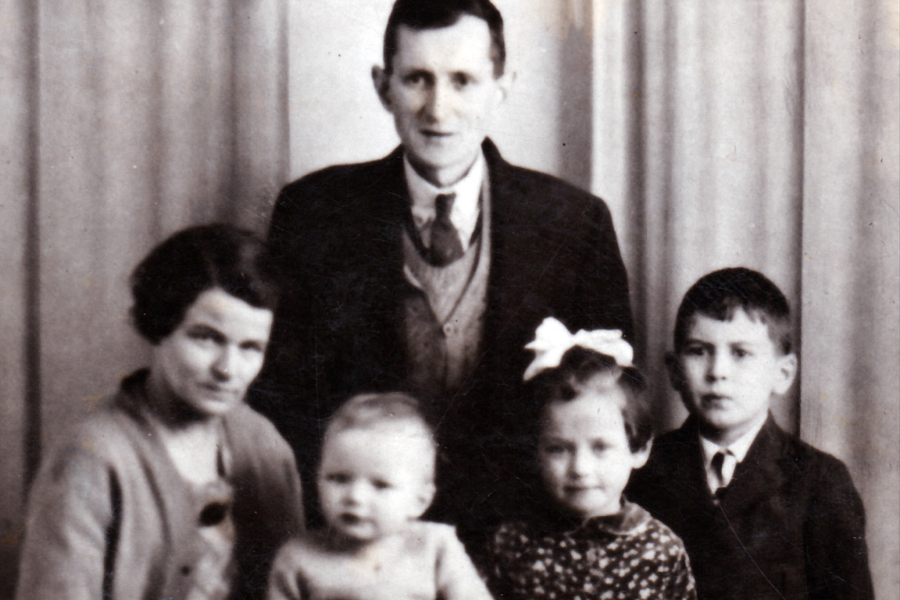
Peter was born in 1940 in a Europe being torn apart by war. His mother worked in the factories around Manchester, England, stacking bombs ready to be loaded onto trains and sent to Royal Air Force (RAF) squadrons around the world. Peter spent many nights in the family Anderson shelter dug into their backyard because of the Manchester Blitz that saw the Luftwaffe rain bombs upon the city, killing and wounding thousands of people.
Later, at the age of twelve, Peter was offered a place at Lord Wandsworth College, a boarding school in Hampshire. Though he hated boarding school at first, sports became the experience’s saving grace. Rugby, cricket, and Puddex (a miniature version of cricket) were the school’s mainstays (but never soccer, with Peter explaining, “If you got a football out, it would be confiscated immediately”). Then, a new teacher arrived who introduced the school to field hockey. Soon a favorite with Peter, field hockey would play a major role in his life thereafter (as you will soon see!).
After leaving school, the University of Liverpool offered Peter a place on their physics degree course. The first thing he did as soon as he began university? Sign up to play field hockey! He also joined the Liverpool University Air Squadron (ULAS)—a university-based training unit run by the RAF—with the intention of encouraging young people to join the air force.
Though thrilled by planes and the freedom of flying, Peter found himself feeling trapped by the idea of air force life. Living in dorms, as he had done at school, and waiting around on the ground to scramble, unable to do much except play cards or pool, did not appeal to someone so ever-ready for action. He decided the RAF was not for him and, after graduation from university, he found a job as a technical officer in a lab at Ferodo Brake Linings.
Having joined Buxton Hockey Club, Peter and his then-girlfriend arranged to create field hockey teams from their workplaces and set up a match: Ferodo versus the Devonshire Hospital. That first game would be the beginning of an enjoyable tradition between Ferodo workers and staff from the Devonshire, as well as being the fateful day on which Peter met his future wife.
He and his girlfriend had stopped going out by the time the first match (won by Ferodo) was played, and Peter recalls meeting a nice young woman from the Devonshire team at the pub afterward. At a rematch a few weeks later, Peter played the ball onto the ankle of that same woman, to which she quickly responded by saying, “I’ll get you for that!” That second time, the Devonshire team emerged victorious.
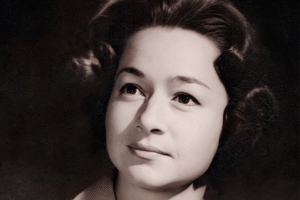
At the pub, Peter and the young woman talked. Her name was Sue Dalton, and she worked as a physio at the hospital. They arranged to meet again, and it wasn’t long before they were set on each other.
In 1967, while sitting and chatting on the settee at Sue’s flat, Peter said something along the lines of, “We might as well get married.” And so they were, on January 20, 1968.
In 1975, finding that his lab job was insufficient to support the family, Peter began a new career as a math teacher. Although he considers himself to have been a reasonably strict teacher, and despite the sixty-hour weeks, Peter feels that he largely had positive experiences in the classroom, furthered by coaching his favorite sport after school, which he greatly enjoyed. He retired from this career in 2003.
The latter part of Peter’s book is focused on the “play” in his life, and here, Peter’s infectious enthusiasm springs up from every page. Indeed, Peter considers field hockey one of his “greatest achievements.”
“Buxton Hockey was my life,” Peter states. He began playing for the club in 1965, and in 1975, he was made captain. Thereafter, he was made either captain or vice-captain again nearly every year for the next two decades. It wasn’t until 2000, when he was sixty, that Peter stopped playing for the first team!
Over the years, he also umpired for his old school team (earning qualifications to do so); started a juniors’ team for boys and girls, which he coached; and was president of the Derbyshire Hockey Association.
Blackpool Hockey Festival was an annual highlight of the family calendar. Beginning his involvement just two months before the birth of his son in 1973, Peter assisted with the organization, umpiring, and timekeeping of the sports event, to which there was also a social side too. It was such a family staple that, years later, his son met his wife there!
After almost forty years with the festival, Peter’s involvement ceased in 2011, when he could begin to look ahead to the next phase of his field hockey career: Masters Hockey. When national annual competitions between England’s regions were held for the over-sixties, -sixty-fives, -seventies, and -seventy-fives, Peter captained the Midlands in all age groups. For several years, he was also selected for England Masters’ teams for European and World Cups. In 2013, when he was seventy-three, he captained the England Masters over-seventies team when, in Belgium, England won the European Cup, beating the Netherlands and Germany twice.
With so many achievements, it must have been difficult for Peter to leave his readers with some simple words of wisdom, but I think his summation makes clear how he has been able to both work and play throughout his life: “Life moves very quickly, so it is important to make the most of it as often as you can by working hard, being determined, and enjoying yourself.”
Written by Isabella Samuels, LifeBook Memoirs editor