In 2003, a few years after immigrating to the U.S., EnhBuren Tsegmid was asked in an English language class to write a list of things that she would like to do but still hadn’t achieved. Jotted down on her list were professional and personal goals, among them world travel and learning to swim without fear (something she later achieved). At the bottom of the page, she wrote, “Before I die, I would like to write my autobiography.”
Gratitude of a Hybrid Woman represents her fifth attempt to complete her story—and what a story it is …
The seventh of twelve children, Buren was born in Ulaanbaatar (UB), the capital of Mongolia, in 1963. At that time, the city’s population was just 179,000, but as the country has transitioned from a rural economy to a more urban one, its population has exploded to over 1.7 million today. A significant driver in her desire to commit her story to paper is this transformation.
“I am so proud of my native country of Mongolia and of all my ancestors who kept their ancient, unique, and rich heritage for us,” Buren says. She feels a strong sense of duty to pass on this history to subsequent generations.
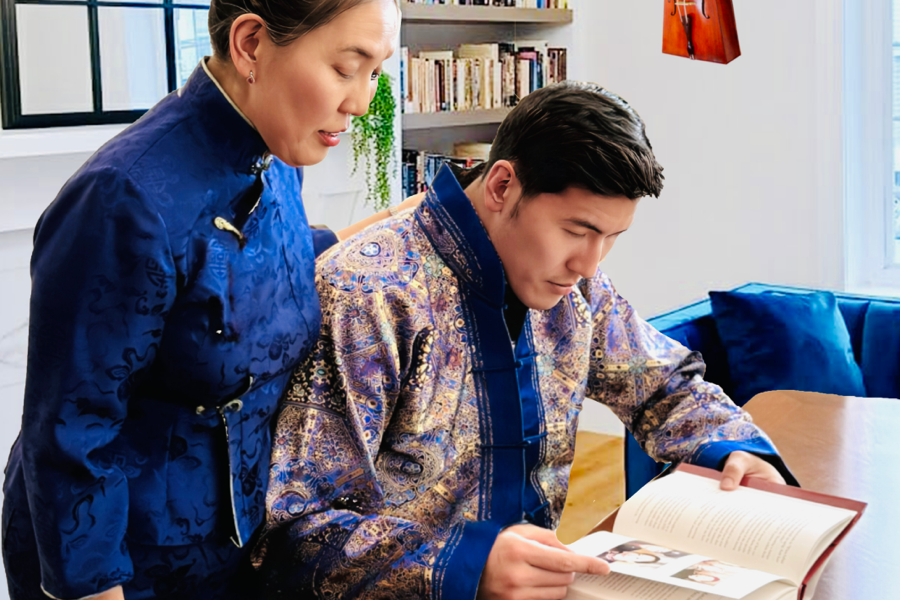
As LifeBook Memoirs’ first Mongolian author, Buren’s story was fascinating to edit—her descriptions of the country’s traditions, history, and everyday life on the steppes of Central Asia are captivating and vividly told.
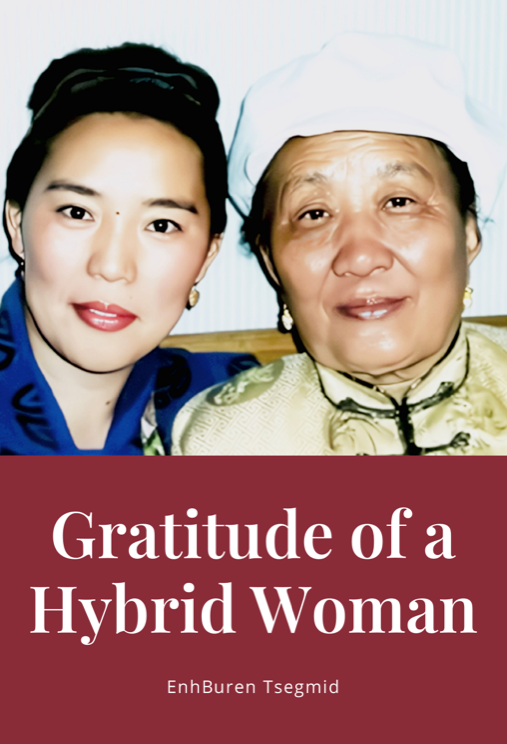
A common practice in Mongolia is for people who do not have children to raise one or more children from the household of a good friend or family member. This, Buren says, “is a great tradition, since it enables people to share both the burdens and the blessings of children.”
So when, at the age of five, Buren’s great-uncle and his wife offered to raise her and her sister Duuren to help their parents, this was a welcome adventure. Although they missed their parents and other siblings very much, Buren and Duuren embraced rural life in Mandalgobi, which is the center of Dundgobi province. In the summer, in Huld sum of Dundgobi province, they took care of baby animals and milked the goats. Later, in her adult years, Buren found herself milking mares, cows, and sheep.
Whereas their parents had lived in an apartment in the city, Buren’s great-uncle and his wife (known to the children as Ania and Agaa) lived in a traditional Mongolian ger; this was an all-season, transportable home known elsewhere as a yurt. Although Ania and Agaa’s ger stayed in Mandalgobi, these homes represent centuries of nomadic heritage and culture and are a significant part of what Buren refers to as the Mongolian “collective memory.”
Traditions and practices were conveyed to Buren and her sister beneath the comfort of the ger’s canvas. These included everything from cooking to child-rearing, as well as traditional proverbs, prayers, and songs for almost every occasion.
Although she and Duuren returned to the city to live with their parents after six years, her time in Mandalgobi formed lifelong impressions, both big and small. A smaller habit was that of cleaning dishes after meals. So as not to waste water, Buren and her family licked their bowls to clean them—something she likes to tease her son by doing even today!
The seeds for her early career aspirations may have also been sown at this time; her grandfather, Jigmid, despite not having official medical training, often served the community as a medicine man and midwife, setting broken bones and helping deliver babies safely. This formed an initial impression which, alongside the experiences of other family illnesses and tragedies, would later lead to Buren qualifying as an obstetrics and gynecology doctor.
Of course, one of the most significant changes to the country of Buren’s birth in recent history was the introduction of communism. Following the Mongolian Revolution of 1921, when the country gained independence from China and established the Mongolian People’s Republic, Mongolia became a satellite state of the Soviet Union. Karl Marx’s philosophy that “religion is the opium of the people” posed a significant threat to Buren’s great-uncle Ania, a Buddhist monk who partially raised Buren and her younger sister, Duuren, in Dundgobi province. Historical records indicate that 17,000 Mongolian monks were killed and over 1,000 monasteries shuttered or destroyed during violent purges.
The communist government did, however, provide other positive things for the Tsegmid family. In 1987, the Mongolian Revolutionary People’s Party of UB awarded her mother a two-bedroom apartment in recognition of her lifelong work and achievements. She was later also recognized with the Red Banner Order of Labor and both the first and second-highest ranks of the Order of Maternal Glory, given to women who had four or more children. The relationship between Mongolia and Russia also enabled Buren to study premature deliveries at Moscow’s Kulakov Medical Research Center, providing her with vital skills to take back to UB.
Buren reflects that, although there were many hardships associated with a communist system, there were many benefits too; growing up, her family had access to universal health coverage and free education, and she did not see homelessness or gaps between the rich and poor—things she became painfully aware of after she moved to the U.S. and experienced them in her own life.
Immigrating to America provided many cultural and psychological shocks. At the time she left Mongolia, Buren was at the peak of her career and conducting research work for a PhD. She found it heartbreaking to find that all her education and training, and her knowledge of multiple languages, “counted for basically nothing in this new ‘land of opportunity.’”
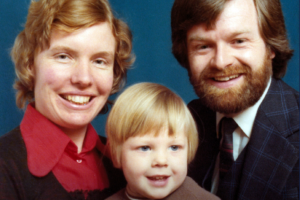
After moving to the U.S. with her husband and son, Buren endured difficult decades, essentially starting from scratch. Having felt isolated and frustrated by the challenges she faced, she hopes that her memoir will help readers to empathize with the life of immigrants in America. She reflects, “While some people may lose patience with immigrants who struggle with new words, a bit of tolerance and mutual respect can go a long way. It takes a lot of inner fortitude and resilience to survive [as an immigrant].”
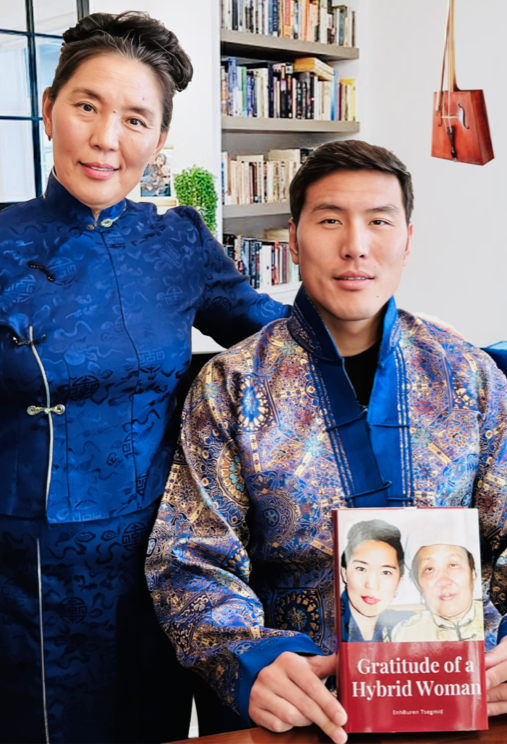
The meaning of EnhBuren’s name can be broken down into two parts: “Enh” means peace or tranquility, and “Buren” means complete or entire.
I hope that, with all the time and care that she has invested in her book, Buren feels a sense of peace and tranquility having committed her story to paper and shared her experiences with her loved ones, as well as a sense of satisfaction in having completed her list of ambitions she wrote all those years ago.
Buren is a woman who truly deserves to be celebrated. Helping to create a testament to her extraordinary life so that her descendants will learn of her bravery, strength and accomplishments is something I am grateful to have played a part in.
Thank you, Buren, for sharing your story with us.
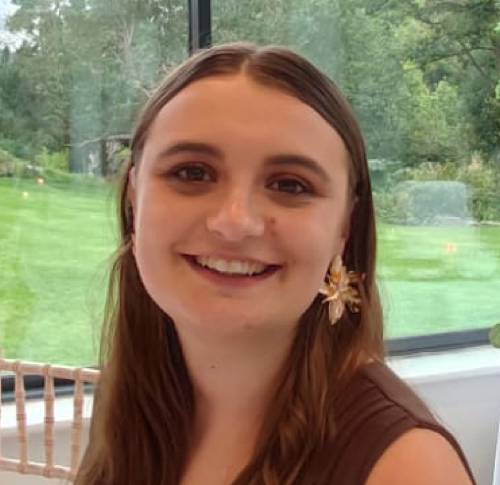
Written by Isabella Roberts, LifeBook Memoirs editor