Researching your family history is one of the most meaningful things you can do. It’s also one of the most popular. In the U.K., the National Archives says the number of people using its services jumped from half a million to over 800,000 in one year, while DNA testing and online trees have turned U.S. genealogy into a mass-market hobby.
Booms create stampedes, though, and there’s an eagerness in many people to dig up the past at speed. They charge in, click “hint,” and—hey presto!—they’re back to the Vikings before dinnertime.
Rushing your research is a surefire way to pinpoint the wrong “John Smith” and build a family tree out of other people’s guesses. It’s also how people fixate on chasing the farthest-back ancestor they can find, forgetting that every name they discover belonged to a person who once lived, loved, struggled, and died, just like them.
If you want something true and meaningful, move beyond genealogy into the context and stories of family history. Genealogy is the paperwork, but family history is what you do with it. It demands evidence, patience, tact, and care.
With that in mind, here are ten mistakes people make when researching family history … and how to avoid making them.
1. Putting it off
In the bustle of everyday life, recording your family history might not seem like the most pressing of priorities. Getting the kids to school, cooking, paying the bills … It all needs to be done, often right now!
The projects that truly matter—the ones we’d look back on with regret if left undone—don’t demand our attention the way a bill or a carpool line does. They must be chosen and ringfenced.
Some people are put off by other things. Potential conversations with relatives might seem difficult, and it can feel easier to leave loved ones unbothered by questions.
But ageing parents who might be willing to answer questions today might not be here tomorrow, a document with the potential to unravel family secrets might be lost, and knowledge that lives in only one person’s memory can vanish suddenly.
If your family history matters to you, don’t leave it for tomorrow. Push through these barriers and start today.
2. Overlooking personal sources
A family history built just on names and dates is little more than a spreadsheet. Facts matter, but they are the skeleton, not the person. Your ancestors had voices, opinions, habits, and stories, and wherever possible, those things deserve to be captured too. That means looking beyond the paper record.
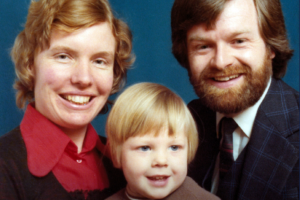
Photographs, home movies, letters, diaries, and heirlooms can tell you things that no census return or birth certificate ever will, and a relative’s memories can bring entire eras to life in a way that a marriage register cannot. The richest family histories draw these sources together, weaving documentary evidence into human detail.
3. Believing the myths
We’ve all heard lines like “I’ve got back to George Washington!” “He’s the president’s sixth cousin!” and “Your grandmother was supposed to be on the Titanic, but she missed the boat!” In my own family, there’s a recurring myth that we have a murderer lurking in a distant branch of our family tree …
Such nuggets of “information”—the good and the less savory—can be treasured deeply within families. They’re often central to perceptions of self and treated as established matters of fact, when, actually, they are anything but. Actor John Hurt, for instance, believed for most of his life that he had Irish ancestry; the discovery that he did not upset him deeply.
Accepting passed-down family lore as historical truth and blindly trusting records are mistakes that can tempt anyone, but for family historians who value the truth, the importance of evidence is paramount.
4. Not researching rigorously
Family history research is only as good as the evidence behind it. One of the most common and consequential mistakes a family historian can make is failing to record where information came from. A name, a date, a place: each should have a source attached to it. Without one, you have no way of knowing whether a fact has come from an original document, a second-hand account, or something whispered to you at a wedding forty years ago. When you try to verify or build on your research, you’ll find yourself back at square one.
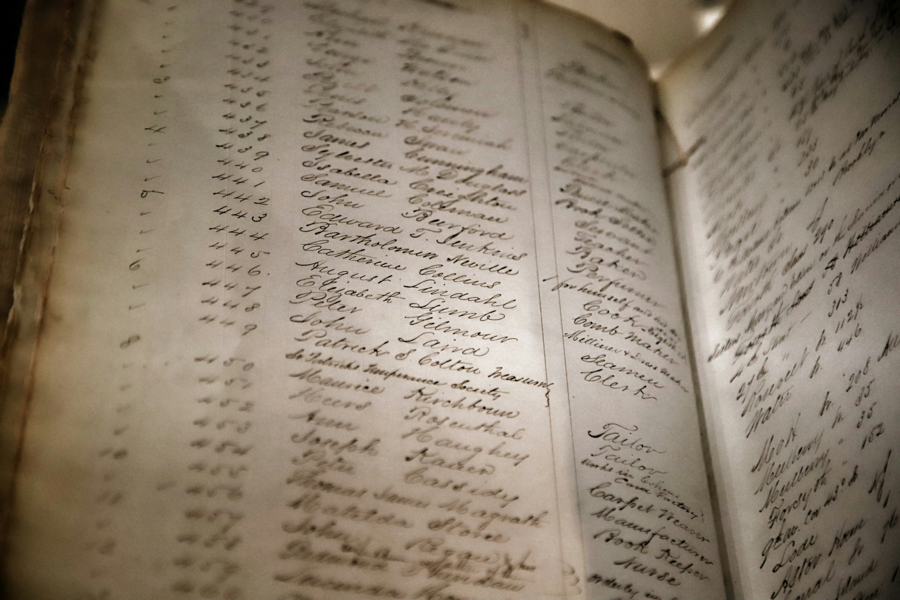
A related trap is assuming that online databases tell the whole story. Resources like Ancestry and FindMyPast are extraordinary, but they are far from complete. If you can’t find the record you’re looking for in a digital archive, it might mean that it hasn’t been digitized or lives in a local archive, awaiting discovery.
Rigorous research means following evidence, not convenience.
5. Misjudging your scope
Focus always helps in genealogy and family history. Fail to be focused, and you’ll lose your thread in a sea of sixth and seventh cousins thrice removed and great-grandparents stretching into the ether.
But you can also go too far the other way and miss out on the detail and color that could seep into your family story from female lines and collateral relatives.
Historically, researchers have tended to zoom in on male ancestors, but focusing on women can reveal stories that would otherwise be lost, since women’s lives were often less documented. Looking at collateral relatives—that is, the brothers, sisters, and cousins who don’t appear in direct lines—can provide missing pieces that bring whole branches into focus. Including them lets you tell a broader story—your ancestors not just as parents and grandparents but as siblings, nieces, and nephews.
6. Descending into chaos
Think, for a moment, how the numbers of family history can become unmanageable. You have two parents, four grandparents, and eight great-grandparents. If you follow every line, then, when you reach the start of the nineteenth century, you’ll have well over 500 names … and that’s before you add in a single sibling, cousin, or other collateral relative.
Numbers like these make the case for careful decisions about scope. They also necessitate tight organization. No one system works for everyone, so find a system that works for you. Programs like Reunion and RootsMagic can help organize your research, and a consistent filing structure—organized by surname, location, or date—can help you manage digital and hard-copy files before they get away from you.
Consider, too, that digital files can get corrupted and hard drives can fail. If you don’t scrupulously follow the 3-2-1 rule of making three backup copies of your data, stored on two types of media (such as a hard drive and a cloud service), with one copy kept somewhere other than home, you run the risk of losing all your hard work.
7. Not diving in
Some people approach family history as if spotting trains or collecting stamps—they gather names and dates, document them, and call it a day. Doing this is an achievement, but by going a step further and placing those individuals within the historical events that shaped their lives—wars, emigration, economics—you can do more than know the bare bones of someone’s existence: you can tell the stories of their lives.
Others make the mistake of stopping when they hit an “interesting” ancestor—a titled family, a war hero, a scandal, a brush with royalty—as if the story’s been solved. But that’s often where the real work starts: the job isn’t to find a headline, it’s to build an accurate picture around it and to check whether the connection holds up.
Television is full of neat examples. On Who Do You Think You Are? actress Courteney Cox’s story didn’t just land on one medieval “wow” moment: it kept going, linking her to Edward I and continuing through earlier English kings to Henry I and William I. Comedian Alexander Armstrong could have stopped once the aristocracy appeared in his tree, but continuing took him back to King Edward III and William the Conqueror.
The point isn’t that everyone needs a king in their branches—it’s that stopping early is how you abandon people who never made the history books. Building out the ordinary lives that made yours possible is every bit as important.
8. Jumping to conclusions
Two common errors in family history research are surprisingly easy to make and surprisingly hard to undo. The first is assuming that spelling in the past was consistent. In fact, it rarely was. Names were recorded phonetically, transcribed by strangers, and anglicized, meaning that your ancestor might appear in different documents as Sullivan, Sullavan, and O’Sullevan.
A related mistake is assuming that two people sharing a name, location, and approximate age must be the same person. They may not be.
Both errors have the same remedy—treat every new record as something to be verified against what you already know, rather than slotted in because it seems to fit.
9. Stopping short of storytelling
The best family histories don’t just make it out of databases and filing cabinets and onto page or screen; they are shared with people who feel excited by them.
Not sharing your research with family is akin to cooking a feast and eating it alone in the dark. And really, after all the effort you’ve put into shining light on your ancestors, why would you not want to do that?
Raw data alone, however, doesn’t make a compelling story, so you need to turn your research into something that people will engage with. This can be tough but rewarding work. The discipline of shaping such material—deciding what to include, what to omit, and how to sequence it so that it carries readers forward—is a craft that many family historians underestimate, but it is worth the effort. A well-told family history will be read and reread in a way that a folder of photocopied documents never will.
Self-published books created on platforms such as Blurb and Lulu are easy and affordable to produce. Scrapbooks, home-produced films, and even Top Trumps-style playing cards are other ideas worth considering.
10. Leaving yourself out
What a tragedy it would be for your children, grandchildren, and future generations if, after all the work you put into recording your family history, your own life went uncelebrated.
Forgetting that you’re part of your own family history, and failing to document your own memories, milestones, and experiences, is surprisingly common. After investing so much in their research, people don’t always have the energy or willingness to write the story of their own life.
If that’s you, it’s worth remembering that you don’t have to go it alone. Many people have enjoyed the guided format offered by LifeBook Memoirs, where interviewers, ghostwriters, and editors capture your memories without turning it into a second full-time project. Visit lifebookmemoirs.com to find out how they can help you tell your story.

Written by Steve Edwards, LifeBook Memoirs editor