
There is a deeply human impulse to hold on to those we love, even long after they are gone. We want to remember them clearly, to keep them present in our lives, and to ensure that future generations can know them as we did. Grief, however, has a way of sharpening one particular truth: that it’s often the smallest details that vanish first. The ordinary, unremarkable fragments – the handwriting on a note, the phrases they used, the stories you meant to ask about “one day” – can suddenly feel priceless.
Our need to preserve and memorialise has even found its way into popular culture. In her song Marjorie, for example, Taylor Swift captures this sense of longing:
I should’ve asked you how to be,
Asked you to write it down for me.
It’s a reminder that love doesn’t live only in big milestones; it lives in the small, almost throwaway traces. When we begin to collect and capture those traces, memory becomes something we can return to – and pass on.
One way to honour that impulse is with a tribute book (sometimes called a ‘memorial book’).
What is a tribute book?
Bereavement research increasingly recognises that people often maintain bonds with those who have died, supported through memory, photographs and shared stories. A tribute book brings these fragments together in one place, representing the person as fully and honestly as possible so those bonds can be sustained, revisited and shared over time.
To tell the tribute subject’s story, we speak with the people who knew them best, gathering their individual perspectives and memories. Because each individual had a unique connection with them, every contribution adds its own distinct brushstroke to the portrait of their life. With care and sensitivity, we weave these voices into a richly layered account that preserves the loved one’s essence for generations to come.
The result is more than just a record of what they achieved. It is a heartfelt reflection of who they were – their character and values, their passions and the impact they had on others – captured in a single beautifully handcrafted volume.
At LifeBook Memoirs, we take particular care to ensure that the tribute book is neither eulogistic nor simply a collection of condolences. It is also neither a comprehensive biography nor a linear life history. What builds the picture instead are the various stories themselves: the advice given, the shared experiences recalled and the mannerisms, sayings and small, telling details that accumulate into something deeply human. It is easy to fall into the trap of describing someone as ‘kind’, ‘caring’, or ‘a good friend’, but such phrases, however apt, tell us little about the texture of their life.
The real treasure emerges from the unique insights that each contributor brings. In this way, each tribute book presents its subject as a multifaceted person – not only as the person you knew, but as a spouse, sibling, parent, schoolmate, colleague or leader. It can reveal dimensions that even those closest to them may never have seen. As one contributor, the subject’s manager at her first job, reflected, “If she had stayed at our company, she would have become my boss”. It was a fresh perspective that her children would never otherwise have known.
Crafting a unique legacy
Each tribute book is entirely unique, tailored to the life and personality of the person being celebrated. There is no single formula to follow, because every family brings its own memories and perspectives to the process, creating a story that feels unmistakably their own. What we do is guide and help them in shaping those contributions into a story that feels both meaningful and enduring.
Some families choose to include tangible keepsakes. One family, for instance, gathered their most cherished family recipes. They combined scanned copies of handwritten cards with beautifully transcribed versions, preserving not just the tastes but also the handwriting they loved so much.
Another family included memories written down by the deceased loved one herself, framed by contributions from her husband and children to contextualise and enrich the narrative.
One tribute book began with reflections from a woman’s family, tracing her early years through their eyes. Childhood friends added vivid memories of school days, followed by colleagues who shared insights from her professional life. Warm anecdotes from her spouse’s family broadened the picture, while chapters on marriage and motherhood added depth. The book closed with a moving tribute written by her husband, creating a complete portrait of a life well lived.
The role of the interviewer–ghostwriter
The team working on these tribute books is purposefully kept small, to ensure that the heart of the story is never diluted. Each project is assigned a specialist interviewer–ghostwriter who is approachable and friendly but also sensitive and careful in gathering stories. Interviewees receive tailored questions ahead of the meeting – these are not prescriptive but a way to spark memories and gently guide the conversation, allowing the contributor to share and preserve memories. This kind of structured remembrance has been described as a supportive tool in grief, helping people organise and share memories and make sense of loss.
Following each interview, the conversation is expertly shaped into a written piece from the contributor’s perspective and then edited. Every contributor reviews and approves their section of the book; nothing is ever printed without full consent. Then, all contributions are compiled with complementary photographs and printed in premium-quality books that will last for generations to come.
Real-life impact: Karen’s story
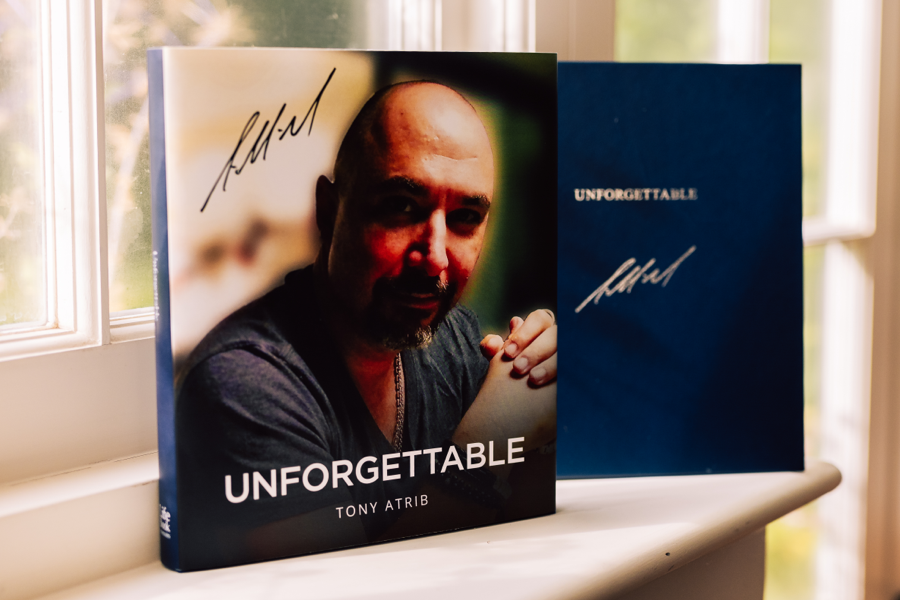
One family we worked with was Karen and her two sons. Karen’s husband, Tony, suddenly passed away in 2015, when their first child was just 13 months old and Karen was pregnant with their second. The young boys would never have the chance to know their father firsthand, but by creating a tribute book, Karen was able to preserve Tony’s personal legacy and share with them what their father was really like. The book became a family treasure, a precious gift that ensured her boys would know their father, not just know of him.
Karen’s experience reflects something researchers have found more broadly: that when families share stories across generations, it can strengthen children’s sense of identity and positive well-being. This suggests that preserved family narratives can matter long after a death has occurred. A tribute book helps ensure those memories and stories are not distorted or lost over time, by creating a shared record the family can return to time and again.
Our co-founder Roy Moëd recently met with Karen to discuss her experience of creating Tony’s tribute book. She shared that just a year after his passing, her memories of him were already starting to slip – an alarming realisation that made the project feel urgent, not only for her but for their two boys.
That urgency wasn’t only about preserving the ‘big’ stories of Tony’s life. It was also about saving the small, everyday traces that carry a person’s presence. In Tony’s tribute book, Karen included a screenshot of the very first text message he ever sent her – something she has since lost from her phone but which is now captured in the pages.
You can watch Karen’s conversation with Roy below.
The human need to remember: The enduring value of a tribute book
Grief is an inherently deep and personal experience, and there is no single ‘right’ way to remember someone. The ways we remember, after all, are as individual as the people we love. A tribute book simply offers one meaningful and carefully crafted way to hold on to that memory with care, depth and sensitivity.
In the epilogue of Tony’s tribute book, Karen wrote to her sons: “‘Not to know’ is very different from ‘not to have’. You had an incredible father, not just to me but to most people who got to know him and love him. My hope is that through this book, you might be able to get a glimpse of everything you lost and didn’t get a chance to know.”
Tribute books exist for this very reason: to ensure that a life is not just remembered but truly known. That is their quiet, enduring value.

Written by Heather Hutchinson, LifeBook Memoirs bespoke project manager