
More than 100 years ago, physicist Albert Einstein developed his theory of relativity in which he speculated that time travel into the future might be possible, though definitely not into the past. Both before and since his startling ideas were presented to a dubious public, the thought of being able to meet your ancestors or descendants has proven a deep fascination for those people who would love to know where they came from.
A sense of identity and belonging is more than geographical; it also what shapes our behaviour, for good or ill, outlook and physical circumstances. Have you always felt comfortable within your family, or do you sometimes feel like an outsider?
Then there are the questions about your ancestors. How did your great uncle make his fortune and then lose it all? Will your daughter become a doctor like her grandmother? Why did your father’s cousins leave their family farm and go to Canada? Has your family stayed close to their roots or dispersed around the world?
These are the sort of questions which can arise when you start investigating your family tree. For many descendants who do that, even the smallest clue can lead to the unexpected. One man searching shipping logs for a great‑uncle’s emigration date uncovered a second name on the passenger list – a previously unknown cousin who had travelled with him. That single discovery reshaped how he understood the relationships, decisions and loyalties that shaped his family’s early story.
Starting a journey of discovery
If time travel was possible, can you imagine speaking face-to-face with your great-grandfather and asking him why he left the rural village in which his family had lived for generations to risk the perils of crossing the Atlantic in a tall ship?
So many questions, but no answers. The only key you have to this man’s dreams, joys and hardships is his place on your family tree, and perhaps his names cribbled on the back of a faded photograph. But even though it is impossible to have a conversation across the generations, you might still be able to connect with this unknown relative by digging into his life before and after immigration. Perhaps there are letters he sent home to the father missing his eldest son. Did he leave behind a broken-hearted girl, or did she jilt him at the altar? You will never know unless you start searching for clues among historical documents and keepsakes and by talking with relatives.
How would you feel if you found you had cousins in a faraway country who looked like you but spoke a different language? Wouldn’t you be eager to meet them to discuss your connections? To learn how your own traits, values and family tendencies connect to a much older story?
Discovering family secrets
In the twenty-first century, the term ‘blended family‘ has become common as a way of describing layers of relationships that have led to, for example, a man having children with more than one woman. This creation of step or half siblings is not a modern occurrence, because human nature dictates that couples will split up, meet someone new, have children and sadly, quite often the offspring of the first union may no longer be regarded as part of the family.
Even today, many families have secrets that can be complicated for a family historian to untangle, especially when surnames change on marriage or by adoption.
Finding a long-lost or never-known-about brother or sister could be both heartwarming and sad. A reunion, if wanted, could be a chance to make up for lost opportunities or a time of regret. Some discoveries may be upsetting. However, they can also strengthen family bonds and give meaning to an ongoing family narrative. And while such truths can be surprising, they often prompt descendants to rethink where they come from and how the past continues to shape their sense of self.
Being a descendant detective
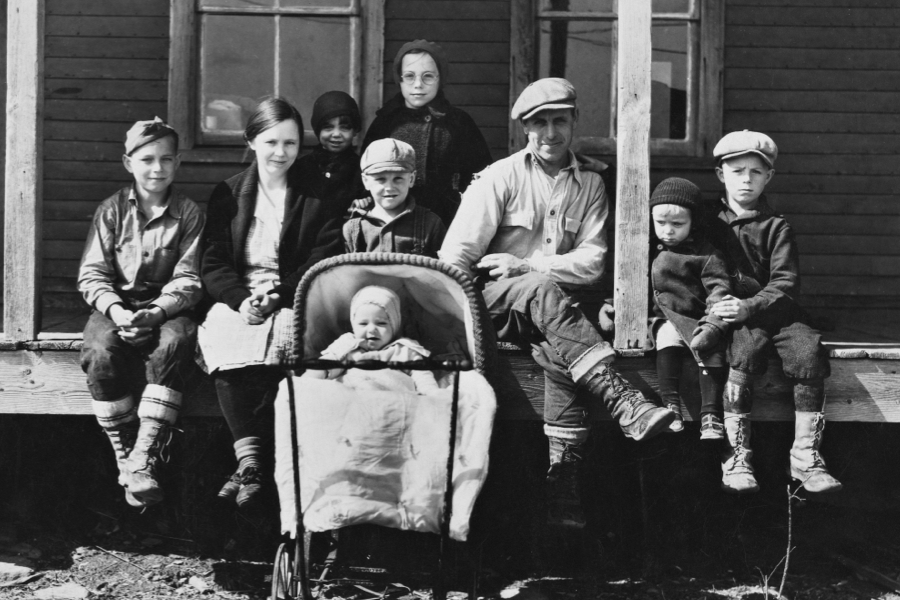
If, as part of your family-tree research, you find one or more mystery photographs, you can begin your detective work by asking all family members if they recognise the person in question. Your older relatives may be able to confirm your suspicions of a family link. Meeting and talking about the past could be the perfect opportunity to forge or renew a relationship with someone whose life was so different to your own. They can help a descendant feel more rooted in the wider family story, even as details are being uncovered.
For example, old wedding photographs might spark the observation that a man in the back row had hair just like your grandfather’s. Who was he, and how are you related?
Do you have a black sheep in your family?
Why does no one want to talk about ‘Bad Bill’? Was he bad, mad or just different from the rest of the family? Who sent poison pen letters to the young woman who had fallen in love with her boss and had his child out of wedlock? Did Frank really work for the king, or did he invent that story to hide his humble start in life? Was Ellen killed in Europe during service in the war, or did she run away with her serviceman boyfriend? Bringing secrets from the past out of what were once thought of as shameful shadows can provide a sense of fulfilment and closure not just for you, but for your descendants and other family members.
Whatever you find out about the lives of your ancestors, you will have the satisfaction of knowing that you have added to your family tree and created a shift in understanding your own identity and sense of belonging.
Recreating the past
You may be lucky and defy Einstein by travelling through time to find and meet a relative you could not have expected to see but who you traced through your family tree. Questions were answered by the internet, then a phone number, a decision to dial and wait, a voice which was strange but so familiar.
For seventy years, you never knew your half-brother and now, sitting next to him for the first time, he is the same age as your father was when he died, and the resemblance is uncanny. They have the same piercing and slightly watery blue eyes, ruddy cheeks, a soft country burr and gentle mannerisms which you never thought you would see again. In that moment – conjured from a record, a traced number or a decision to dial – you understand not only where you come from, but where you have always belonged.
Written by Alicia, LifeBook Memoirs interviewer and ghostwriter