Behind each LifeBook is a team of individuals who care deeply about what we do. People often ask what draws us to the work of capturing private memoirs – what sparks our enthusiasm day after day, story after story. The truth is that our inspirations are as varied as the lives we help preserve.
Still, there are certain motivations that we share. Here, we explore the ones that lie at the heart of LifeBook Memoirs and that shape our craft – motivations rooted in empathy, curiosity, craftsmanship and reverence for the past.
The story that sparked a company
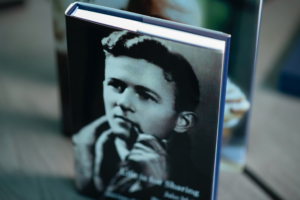
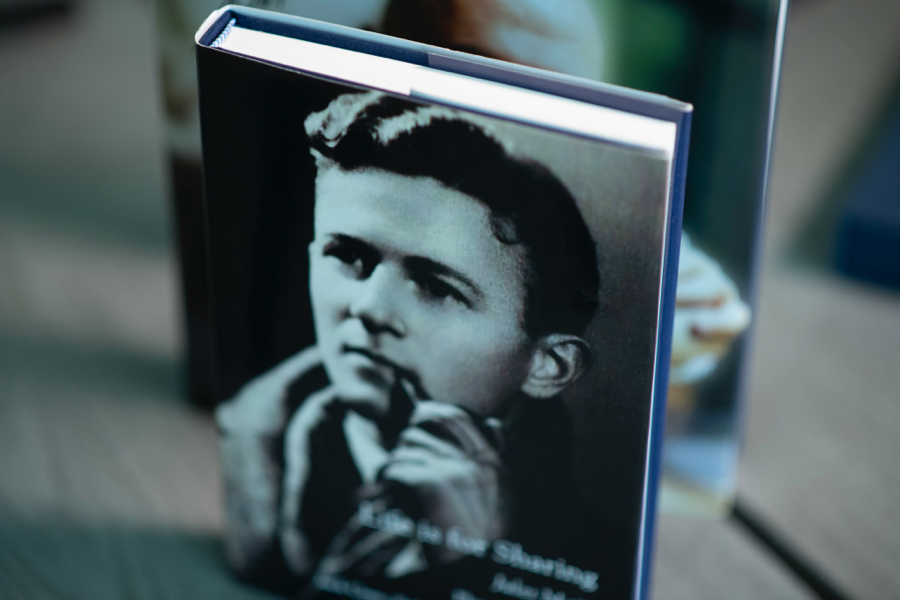
Our co-founder Roy Moëd experienced something that many people with aging parents go through. He recognised the weight of the stories that his father, Jules, told, but over time and repetition he had become an unappreciative audience. So, rather than respond to retells with frustration, Roy did something as unexpected as it was proactive: he found someone to listen to Jules with fresh ears and record his story.
Upon reading the manuscript that emerged, Roy was surprised to find that he hadn’t, in fact, heard everything before. Not even close. It was a revelation that carried wonder and a quiet shock. It left him wanting more, but sadly Jules passed away before the project could be completed.
Jules’s unfinished memoir existed as a thin stack of papers held together by a binder clip. What was missing was the artistry, professionalism and attention to detail needed to transform them from words on a page into a private memoir – something tangible and beautiful that Roy could revisit and pass down. The tragedy of unfinished stories and the urgency of preservation became impossible for him to ignore.
This motivation to act led to the founding of LifeBook Memoirs, where the premise has always been simple: the stories are always there, they’re always interesting, and, if treated with care, they’ll be cherished for generations to come.
Roy and his father proved it first. And so has every author since.
The belief that no life is ordinary
Many of us here share a love of social history and a fascination with the texture of daily life that becomes extraordinary simply by surviving the passage of time. As a LifeBook ghostwriter, I’ve lost count of authors who thought their lives were unremarkable, only to describe stealing milk crates so they could hop up and peek through the window of the only family on the block with a television. “That’s just how things were back then,” they’d say, as if no further explanation were necessary. Maybe so, but it certainly isn’t how things are now, and that is exactly what makes such stories worth telling.
Details like these, however small, are priceless. They showcase the texture of vanished eras and represent micro history at its finest, offering glimpses into a world that feels impossibly distant but which becomes fascinating over time and remains vivid through storytelling. So often, however, they are almost thrown away in casual conversation.
I heard the ‘ordinary life’ sentiment on my very first LifeBook assignment. I was working with an author whose son wanted to preserve his stories for the next generation, so he gifted him a LifeBook project. The reluctant father soon realised that it was as much a gift to him as to the next generation. It gave him a chance to describe how he came into the world and the world that was waiting for him. It prompted him to relive long-buried childhood memories and to explain the kind of worker, husband, father and grandfather he became.
As he described the daily keeping of family values and traditions, a life he’d dismissed as ‘boring’ suddenly had a depth that even he couldn’t deny. I sensed the shift in his perspective in the cadence of his voice and in the slap of his knee at the end of each story – a punctuation mark with a language all its own. A story about brotherly shenanigans produced two sharp and quick slaps, still full of mischief. A difficult parenting decision landed one harder one, like a full stop on something he was still debating in his head. The loss of a loved one brought a quiet tap, signalling that it was time to move on, even if his voice wasn’t quite ready.
The joy that comes with uncovering the unusual in the ordinary and the privilege of witnessing someone’s slow, gentle self-discovery are, and always will be, amongst our biggest inspirations.
The trust people place in us
As I listened to the interview recordings, I drew a portrait of the man – a kind rock of a human wearing threadbare jeans, sitting at a bonfire surrounded by family. I have no idea if this picture was accurate, but it felt true, and it shaped every sentence I wrote for him.
The fact that he didn’t believe his life warranted a memoir never left my mind, and I was eager for the LifeBook Memoirs team to prove him wrong. First, the interviewer would have to earn his trust and build his confidence. This happened over time and through a process designed to make him feel safe in going beyond the surface to explain the backdrop and consequences of the stories spoken around the bonfire. It was my job to piece together the context, mimic his voice and craft a narrative that reflected his full character and the richness of the stories he told.
That’s a lot of trust to place in a team of people, but it’s a privilege that inspires me and the interviewers, writers and editors I work with to honour every story as if it were our own.
The craft of writing as someone else
Whenever asked whether AI could do what I do, I think about this author. Sure, a machine could transcribe his words and organise his stories, but it wouldn’t detect the difference between a “can you believe we got away with that?” slap or one that meant, “I miss him every minute of every day”. AI won’t picture the man, interpret his pauses or intuit when something is left unsaid.
The intimacy of listening to someone tell their life story, the emotional intelligence required to interpret tone, pauses and the subtleties of how people communicate meaning beyond words are all things that can’t be scraped from a voice memo or reverse-engineered from a dataset. They sit at the heart of the craft of ghostwriting as someone else – not ventriloquism or impersonation but a careful act of translation: taking a lived experience and finding the truest shape for it on the page. It’s about knowing when to follow the chronology and when to follow the feeling; when to push gently for clarity and when to let silence stand because that, too, is part of the story. And it’s why, in the end, what I’m paid for isn’t mere typing – it’s presence.
Only people who appreciate the art of storytelling and care deeply about getting it right can carry that responsibility. It is their profound reverence for story structure, voice, detail and emotional truth, and their deep love of narrative art, that allows us to write in someone else’s voice without losing the integrity of their experience. This is also fueled by curiosity: how do people choose which moments to share? How does identity form across a lifetime? These questions inspire us as much as the answers.
The pursuit of heirloom perfection
One day, our author’s chair by the bonfire will be empty, yet his family will still gather. And when they do, his presence will be known.
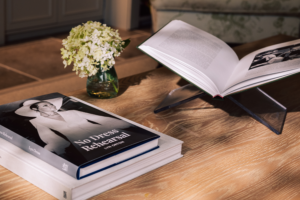
Because a son loved him enough to make sure his children and grandchildren knew him in the same way. Because an interviewer asked questions with curiosity and compassion and gently pressed when the knee slap needed interpretation. And because a writer who lived hundreds of miles away fell for him through sound alone and did her level best to do his story justice. Because an editor pored over every word to ensure his voice was captured and his stories flowed naturally and a typesetter carefully laid out each page, lovingly restoring and artfully arranging his photographs. Because a bookbinder selected archival-quality paper, custom-designed the dust jacket and handstitched the book to lay flat for the best possible reading experience.
All of this is rooted in our admiration for craft, beauty and permanence and in our love of artefact-making, of creating something lasting that will outlive us all. That’s how my author’s stories were transformed from vague memories to words on a page and, ultimately, to an heirloom that will be treasured by generations to come.
The readers not yet born
Someday, a new family member will open that book or listen to the special voice-recorded session. They will meet my author for the first time and feel his mischief. They will witness his strength and sense his grace. And maybe, just maybe, they will recognise something of him in themselves.
Helping families feel linked across generations is one of the most powerful inspirations shared across LifeBook project teams. We each bring our own motivations and inspirations to our work, but this one binds us: the belief that stories are a bridge between those who lived, those who remember and those who are still to come.
Roy was inspired by his father’s story. Similarly, my first LifeBook author became the inspiration for every project that followed for me. Because here’s the thing about all of our ‘ordinary’ authors: their lives are anything but.
Everyone who trusts us to share their stories renews our reasons for doing this. Yours will too.
Written by Suzanne, LifeBook Memoirs ghostwriter