
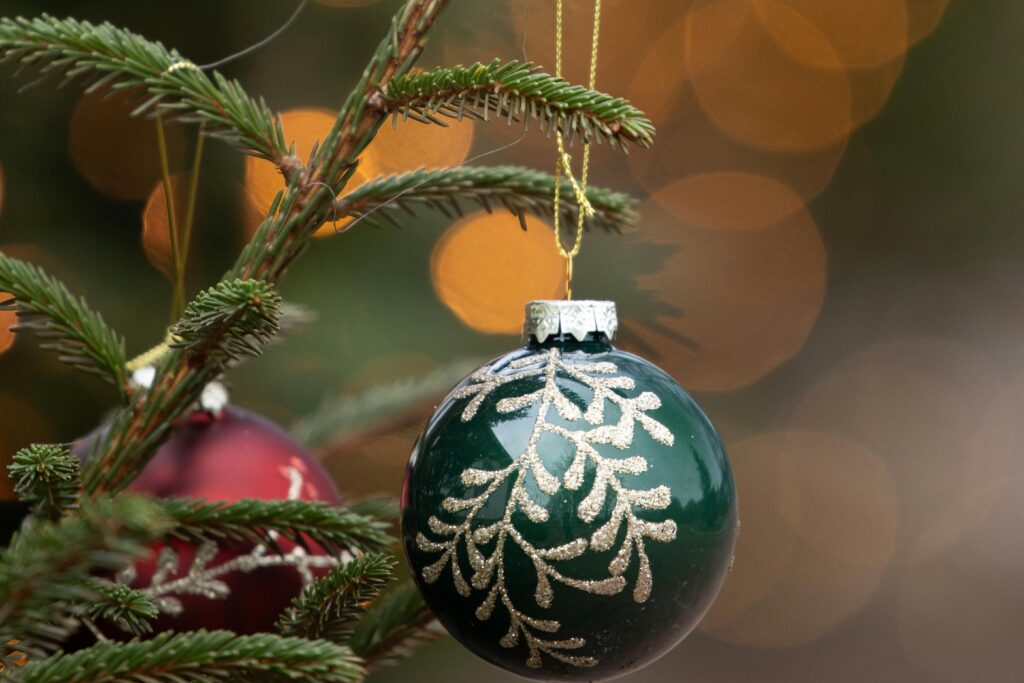
The season is upon us, drawing 2025 to a close and ushering in another year. But before 2026 dawns, many will be celebrating a few sacred days of peace, rest and kinship. As the lights twinkle and the boughs are decked, and while the world seems to glow with a green-and-red haze, we may start to look back on Christmases past and reminisce.
Many of us will recall fond childhood memories, just as one LifeBook author recently recalled her most magical Christmas present, received during the war. After spotting a beautiful china doll in a shop window, the author fell instantly in love; when she returned, a ‘sold’ sign was hanging in its place. What joy there was on Christmas morning when that doll magically appeared under the tree!
Others might look back on times when they created the magic themselves. A recent LifeBook author recounted camping on a beach in Florida with their young family. Having knitted stockings with little bells on the toes for each of their children and hung the stockings outside the tent on Christmas Eve, they reminisced, “the jingle jingle of those bells at five o’clock [on Christmas morning] let us know that our excited little ones could wait no longer for their gift”.
These are special Christmases remembered for the particular mark they made, but there are also annual customs that make up a more universally picture-perfect Yuletide, as well as traditions that are unique to our own families, lovingly observed down the generations.
In this post, we’ll be looking at how some of our best-loved Christmastime customs started and how they’ve endured, and we’ll share a few of our own traditions too.
The festivities of our forebears
Many of our most-loved Christmas traditions in Britain and America took on their modern forms relatively recently, in the Victorian period, drawing on customs from across northern Europe. Queen Victoria’s grandmother, Queen Charlotte, wife of King George III, first brought the tradition of the Christmas tree from Germany to Britain in 1800, but it wasn’t for nearly fifty years, when Prince Albert commissioned an engraving of the young, growing royal family standing around an adorned fir tree in 1848, that the Christmas tree gained popularity outside the palace. Christmas cards and crackers, ornaments, eating turkey, mince pies and even Father Christmas himself are also Victorian inventions.
These Victorian customs didn’t remain confined to Britain; many travelled westward across the Atlantic with British and European settlers and strongly influenced the shape of Christmas celebrations in the United States. Many were quickly adopted and adapted; others evolved in new ways while retaining their familiar festive roots.
Prince Albert’s engraving also depicted how Christmas festivities were being transformed from the raucous, adult holiday it had been into a more peaceful, family-orientated affair. Not only due to the imagery of domestic bliss shared by Queen Victoria and Prince Albert, industrialisation meant that, for many, time at home had become more sacred than ever. Recall, for instance, how begrudgingly Ebeneezer Scrooge grants Bob Cratchit the day off for Christmas: “It’s not convenient. And it’s not fair! … A poor excuse for picking a man’s pocket every twenty-fifth of December!”
Across the Atlantic, a similar transformation was underway. In the United States, nineteenth-century writers and illustrators, from Washington Irving to Thomas Nast, were reimagining Christmas as a domestic, child-centred celebration, reinforcing many of the same values taking hold in Britain at the time.
And yet, the merriment and mischief enjoyed by our earlier ancestors lives on in surprising ways. In many European countries, it was traditional to nominate a Christmas king or queen. Thought to have been adopted from Roman winter festivities or the Medieval custom of electing ‘Boy Bishops’ from among choristers on the Feast of the Holy Innocents (28th December), Christmas kings and queens were elected by chance, the temporary monarch having found a bean inside a cake (some in Britain may recall finding a silver sixpence in their Christmas pudding – a tradition reminiscent of this forgotten one!). Switching up the status quo inevitably led to mischief. When Robert Dudley, favourite of Queen Elizabeth I, was named Christmas Prince and Master of the Revels from Christmas Eve through to Twelfth Night, he dressed in white armour and led a fox-and-cat hunt through a grand hall. This short-term royal appointment lives on in a very small way, in the crowns found in our Christmas crackers.
While these playful inversions of hierarchy were rooted in European custom, Americans developed their own light-hearted seasonal rituals, often centred on games, gifts and communal gatherings that served a similar purpose: shared joy and temporary escape from everyday roles.
Christmas caroling was also a Christmastime tradition observed by communities in Britain for hundreds of years prior to modern-day favourite carols being composed. In her book The Dead of Winter, writer Sarah Clegg describes the tradition of ‘wassailing’ as a ceremony to encourage the spirits of orchards and woodlands to bring a bountiful spring harvest, which then became a communal drinking ceremony. In the seventeenth century, groups of women began to travel from door to door, offering a drink from the ‘wassail bowl’ in exchange for food or money. The tradition of going from door to door to demand food and money doesn’t happen anymore (though some parents hosting adult children this year might argue differently!), but it’s easy to trace where the custom of caroling evolved from. The tradition’s origins are remembered in the lyrics of We Wish You a Merry Christmas: “… so bring us some figgy pudding, and a cup of good cheer! … We won’t go until we’ve got some, so bring some out here!”
Though customs may differ from country to country, the impulse behind them – the desire to mark time, gather loved ones and create shared meaning – remains remarkably consistent.
Christmas at LifeBook Memoirs
Some traditions evolve because life adapts in a way that makes some practices unfeasible. The Yule log, for instance, has morphed significantly over time. Once a very large log fed into, presumably, a very large hearth to burn from 23rd December through to Twelfth Night, changes in technology and lifestyle demanded that the tradition of the Yule log grow into something more practical – and, thankfully, delicious.
Other traditions arise from new cultural influences. In LifeBook Memoirs project manager Helen’s family, finding the ‘Christmas pickle’ hidden in the Christmas tree was a yearly treat, with the winner receiving an extra present. This tradition is perhaps a German American one, which Helen’s grandmother may have introduced from her German ancestors or possibly from the time when she worked at Woolworths – the first store to import pickle decorations to the U.S.
In my family, we have always observed “Stir-Up Sunday”, the Sunday before the first of Advent, when my grandmother, mother and I gather together to make the Christmas cake. This tradition is by no means unique to our family; cakes and puddings are thought to have been part of Christmastime traditions for centuries, and many in the U.K. also observe the day, but for me, the sanctity of this practice comes from knowing that the women of my family have done this for at least 100 years (we work from my grandmother’s grandmother’s recipe!). Technology has changed this tradition for the better – kitchen gadgets and CD players, namely – and time has demanded documentation of the recipe, as none of us can remember all the measurements by heart anymore. With this tradition comes other, smaller annual habits; each year, we critique ourselves—more milk, a dash more brandy—and each year, we forget our notes from the last time around.
A tradition handed down from a previous generation in editor Steve’s family is Boxing Day presents, stashed away inside the tree for children to find, keeping the magic alive for one extra day. Meanwhile, new additions to the family can see traditions blending and growing. Project manager Laura and her partner’s family traditions have become combined; on Christmas Eve, everyone picks one present from under the tree on behalf of another family member for them to open, then they enjoy loaded hot chocolates and a Christmas movie before Midnight Mass.
Not all traditions are observed by families, however. One of U.S. recruiter Gail’s favourite holiday institutions brings her neighbourhood community together, with lanterns lit along the street, a Santa Claus on a fire engine for the kids and biscuits and hot drinks for all to share.
… Through the years we all will be together, if the fates allow …
For many, Christmas is a marker of time, a snapshot of a family growing, changing and shifting. It’s probably our resistance to that bittersweet sense of time slipping away that makes us hold fast to our traditions. But how do we make sure that future generations keep our favourite holiday habits alive into the future? Perhaps the sense of change and of lost loved ones being near is why telling stories – particularly ghost stories – has long been customary at this time of year. During the long, cold nights of winter, gathering at the hearthside with loved ones and sharing memories feels natural. The peace and rest of Christmastime is ideal for reminiscing and remembering. It’s often in these quiet moments, when families gather, stories surface and memories are shared, that we become most aware of how much of our past lives only in the telling of it.
Just like my great-great-grandmother’s Christmas cake recipe, now splashed with brandy and stained by currant-sticky fingertips, documenting our precious family legacies by setting pen to paper is how we guarantee that our favourite traditions live on. For some families, that act of preservation takes the form of a personal memoir – created thoughtfully, in conversation and with care. And that’s what we do at LifeBook Memoirs – help people ensure that the stories they’ve lived don’t disappear when the telling stops but remain to be returned to and shared, year after year, Christmas after Christmas.
Call LifeBook Memoirs to turn your memories and traditions into a private autobiography.
Written by Isabella Samuels, LifeBook Memoirs editor