Occasionally, you can spot a Brit abroad simply by the noise they make as they attempt to communicate with the locals.
According to a survey of more than 1,000 British holidaymakers by i-interpret4u, well over 80 per cent of travellers have visited a country where they don’t speak the language – and at least some of them seem to think that their only way to obtain service in bars, restaurants and shops, or to seek directions, is to repeat their English request in increasingly higher and higher volume, until frustration sinks in all round.
Not so John Rowland Harris. A much travelled, hugely intelligent and fascinating individual, whenever John travelled abroad, he would surely have struggled to find a country in which he didn’t speak the lingo!
John’s talent for languages saw him excel at school, and by the time he was eighteen, he was fluent in French, Spanish and Italian, with A level passes in each subject. That was only the start. When he got his first pay packet, he went to the book section at Jarrolds, a department store in Norwich, and bought Teach Yourself books for ten different languages.
“Whatever have you done that for?” his mother asked.
“Well, I’m eventually going to learn all of them,” he replied. And he did.
John’s linguistic talents saw him enter the Polyglot of Europe contest, which was open to anyone who could speak at least nine languages. It saw him compete against some 150 language specialists from the twelve countries that, at that time, were the members of the European Community (the predecessor to the European Union).
John entered the competition with over a dozen languages, although the organisers wouldn’t accept Latin (“a dead language”), Esperanto (“an artificial language”) and British Sign Language (“a non-vocal language”). He therefore entered with English, French, Spanish, Portuguese, Italian, German, Dutch, Danish, Norwegian and Swedish, while promising himself that were he to make the final, he would learn Greek as a point of honour. True to his word, he made the final twenty and taught himself Greek. The Queen sent him a goodwill message, and he ended up sitting in a television studio alongside Sir Ranulph Fiennes (“Call me Ran”) and got to present the UK weather forecast in Greek – a language he had barely known a word of just a few weeks previously!
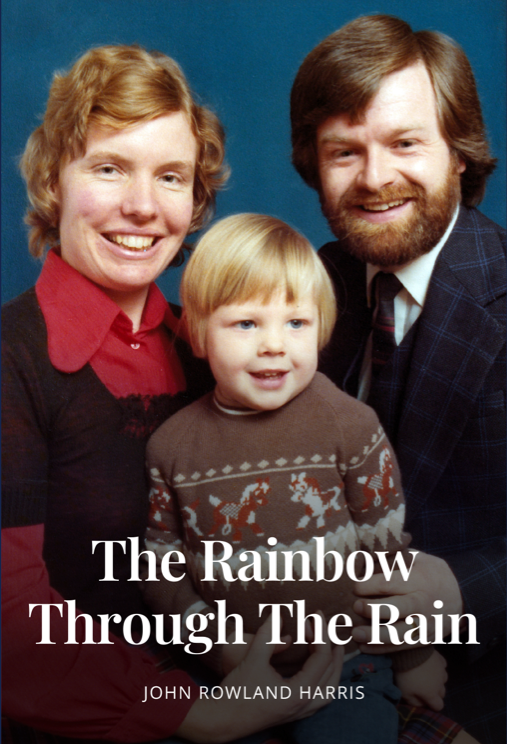
John’s book is titled The Rainbow Through The Rain, and it is a heartfelt and inspiring memoir filled with personal triumphs, challenges, and a deep appreciation for family, music and, of course, linguistics.
The son of Stanley and Gwen Harris, John’s early years were spent in Bungay, Suffolk. Born during the Second World War, his ability to recall moments from his childhood, such as his father’s eventual return from the conflict and his first piano lesson, provide a nostalgic touch to his recollections.
Away from languages, which John spent many years teaching to bewitched students, music has been another central theme of his life. From his first piano lesson at the age of six to his later performances at various venues, his love for, and appreciation of, music shines through his story. A keen follower of icons like Winifred Atwell, Ruby Murray and Russ Conway, John became an enthusiastic performer who raised large sums of money for charity by hosting music marathons and other fund-raising events.
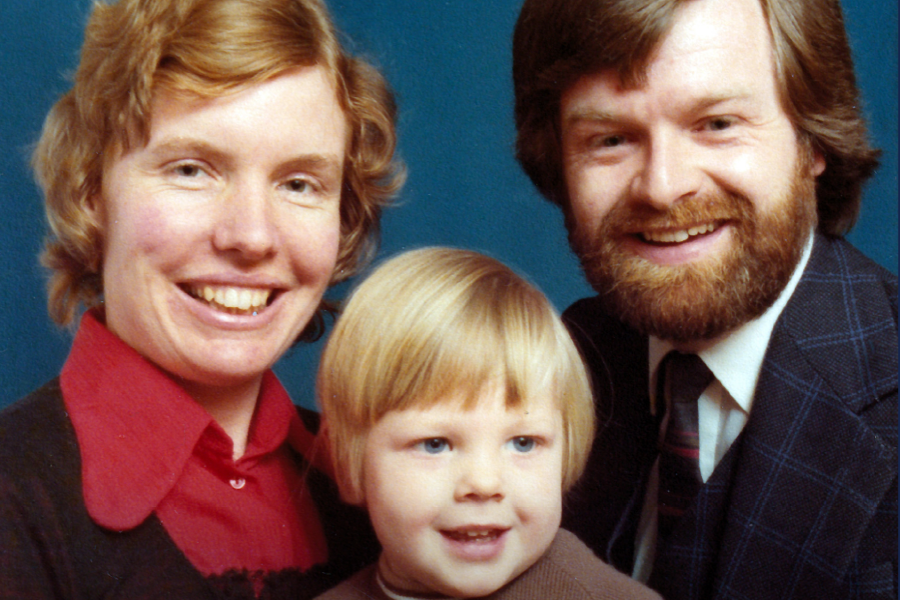
His story is not without its tales of hardship, including his struggles with mental health and the challenges of dealing with his wife’s battle with multiple sclerosis and her family’s interference in their relationship. The adoption of his son, Timothy, is a particularly poignant story, and his love and devotion to Timothy are beautifully captured in his poem Adopted Son, with which he completes his hugely moving memoir.
The title, The Rainbow Through The Rain, encapsulates his philosophy of finding hope and beauty even in the darkest of times. His dedication to fostering connections through language, music and community service is a recurring theme, while his recounting of his 130 trips to foreign lands offers a fascinating and much-appreciated contrast to the one sometimes painted of Brits abroad.
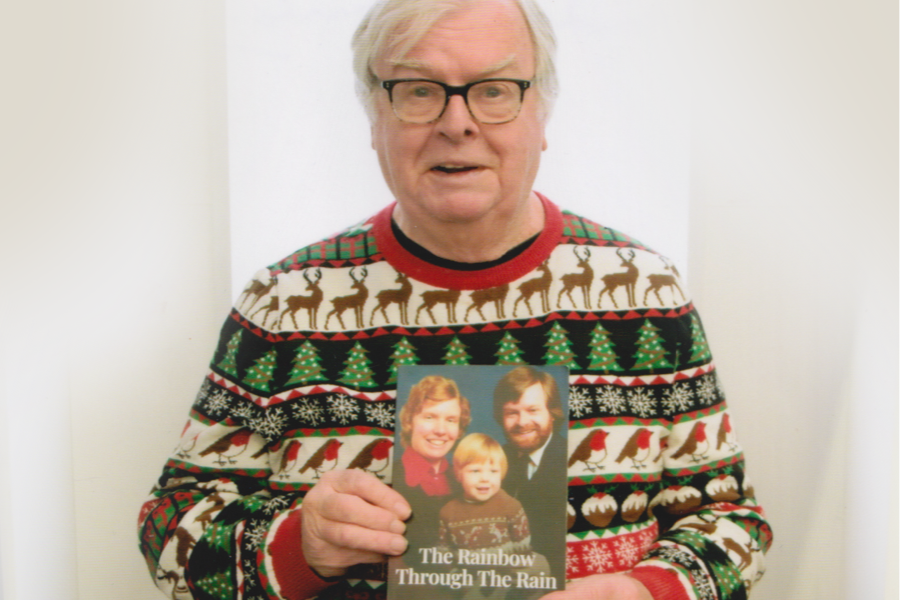
In conclusion, this hugely honest and detailed memoir is a celebration of a life well lived, a testament to the power of perseverance, the importance of family and the joy of pursuing one’s passions.
Most importantly, it serves to remind us that whatever challenges we may face, there is a rainbow to be found through the rain. It is a celebration of the human spirit, and John’s story is one that we should all be proud of.

Written by Stephen Pitts, LifeBook Memoirs editor