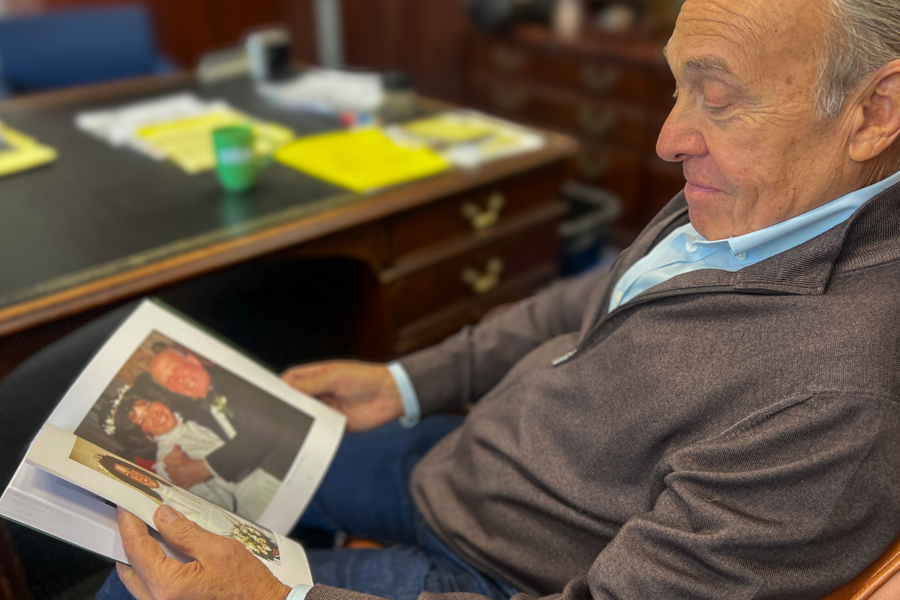
At my friend Ed’s 75th birthday party, his grandson asked him about his favourite present. He froze, and after a few beats said, “I don’t know. There were so many!” In that instant, our eyes met. We both knew the answer. The real gift was a lesson he learned at fifteen. Ed was sitting at the kitchen table when a neighbour paid a visit. When she left, his mother spun on her heels, cuffed him on the back of the head, and sent him to his room without supper, hissing, “You ALWAYS stand when a woman walks in the room!”
Ed has carried that lesson for sixty years. It became the standard he holds his sons and his grandson to today. Whilst not wrapped in a bow, Ed still thinks of it as a gift. But he couldn’t retrieve it when put on the spot because that’s not how memory works under pressure.
Ed experienced what psychologist Barry Schwartz calls the paradox of choice. When asked for the ‘best’ or ‘most memorable’ of anything, the brain shifts from retrieval to evaluation mode. Rather than recalling a single memory, the brain goes into comparison mode, ranking all possible memories against each other to arrive at the best answer. Psychologists sometimes refer to this phenomenon as decision paralysis. Ed wasn’t being forgetful. His brain was simply doing what brains do when asked to rank a lifetime.
Why we often miss them in real time
There was probably something else in Ed’s pause. A quieter fear that no one likes to talk about. What if the moments that shaped him most slipped past unrecognised? Not the dramatic ones, like when he decided to leave a career in teaching to start his own business, when he met his wife or had his first child, but the ordinary occasions, like Sunday dinners, that his kids treated as an obligation. Or the chores they did under constant protest. Or the annual gingerbread-making party he hosted, which was indistinguishable from one year to the next, until they stopped. None of it felt significant in the living. It rarely does.
The moments that become meaningful only later on
Teenage Ed probably wasn’t thinking, “I’m never doing that again,” as he sat in his room, stomach growling, staging his defence. That’s because the most meaningful moments rarely announce themselves as they happen. Meaning is assigned retroactively, after time, reflection and retelling.
The father who took his son to work every weekend until he was old enough to work on his own. The mother who moved the whole family to her father’s house to take care of him once her mother had died. The aunt who would show up every weekend to take all her nieces and nephews on adventures. The father, the mother, the aunt. They were all doing what they thought best. Little did they know that in the doing, they were imparting values their families would carry long after they were gone.
The emotional value of reflecting on your life
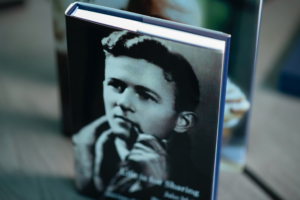
In my work as a ghostwriter of private memoirs, books created exclusively for the author to share with family, friends and generations to come, authors often arrive at the project with trepidation. They’re not sure which stories matter or whether the most important ones have already begun to fade.
That concern, while natural, is easily put to rest. The writing process itself is an act of discovery. An author may breeze past the subtle events that changed everything because, at the time, it didn’t feel like a life-defining decision; they were just playing the cards they’d been dealt. The draft lottery number they remember five decades later; the weather on the afternoon they chose to enlist; the look on their father’s face when they shared the news. The memoir process restores significance to those moments.
For many authors, this is unexpected. They approach their memoir projects as caregivers. They are preserving their stories for their children, grandchildren, and generations unborn. Inevitably, throughout the process, something shifts. The interviewers ask questions that encourage them to go deeper than they had initially intended. The process prompts memories long forgotten, and sequences and patterns begin to emerge. These insights reveal the common themes showing up in their life and the full meaning of the seemingly ordinary. An understanding of why they made the choices they made and the consequences of those choices. A recognition of what they built and how. Many authors embark on the memoir process intending to give a gift. Most are surprised to discover it was meant for them, too.
Why sharing memories matters more than ever
Memory often depends on context. Sometimes, all it takes for memories to come flooding back is the right place, the right people, and the right question. These contextual clues are what help bring buried stories to the surface. Without them, the stories lie dormant, untold and unasked for. My father and I stumbled on this discovery in the most unexpected of ways.
When I was in my twenties, I toured Ireland with my father and older brother. It was a first for all of us. My grandfather had emigrated from Wicklow at ten years old and died long before my brother and I were born, taking most of his stories with him.
We didn’t anticipate what being there would unlock in my father. Somewhere along the winding roads between Shannon and Dublin, my father began speaking with a pitch-perfect brogue. We had heard it before, usually in punchlines, but the one that emerged was different. It sounded less like a gimmick and more like something inherited. He began surfacing stories about his father’s childhood that we had never heard. And, at unexpected times along the way, he recited a poem about the Vale of Avoca, which we were later to learn was The Meeting of the Waters, written in 1808 by Thomas Moore.
“There is not in the wide world a valley so sweet,
As the vale in whose bosom the bright waters meet;
Oh! The last rays of feeling and life must depart,
Ere the bloom of that valley shall fade from my heart.”
When we got to Wicklow, parked the car and walked down to see this now famous-to-us Vale of Avoca, we were thunderstruck to find Moore’s poem, the one my father had been reciting from memory throughout the trip. The one his long-deceased father had recited to him, carved on a plaque on one of the rocks. A man I never knew. Dead for decades. Suddenly present in stone.
My grandfather passed his feelings for his homeland down to his son in that poem. My father carried it with him, probably without even knowing it. And there it lay, patient and waiting for the right moment to come to light.
Ireland was the catalyst. The sights, smells and sounds of the place unlocked stories my father had never told us before. Without that trip, those stories might not have found their way to my brother and me. But let’s face it. Context doesn’t always find us.
We didn’t think to take a picture. We were too caught up in the experience to recognize it for what it was. And a photograph couldn’t have captured the meaning anyway. It wouldn’t be able to show the connection I felt to my father, and his father, or the empathy I felt for a ten-year-old boy who’d left everything he knew and held dear behind. What would have captured it is exactly what I wish we had thought to do: to sit down together, tell the whole story, and write it down.
Turning memories into a lasting legacy
Creating a lasting legacy takes more than a collection of remembered moments. It takes an interviewer who knows how to ask the question behind the questions and who has the patience to wait for the answer that matters. A ghostwriter who can surface the values that run through the stories. An editor who ensures the voice on the page belongs to the person who lived it. And, a bookbinder who understands that the object carrying these stories should be as lasting as the stories themselves.
That’s at the heart of what LifeBook Memoirs does for authors. It creates a rendering of a life, from the moments that shaped it to the values that ran through it, and a meaning that only becomes visible in the telling. We know that someday, someone will open the book and meet a person they never had a chance to know. They will understand more about where they came from, and, in that moment, they will become connected to something much bigger than themselves.
Written by Suzanne, LifeBook Memoirs ghostwriter