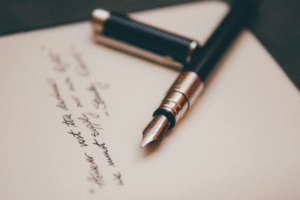
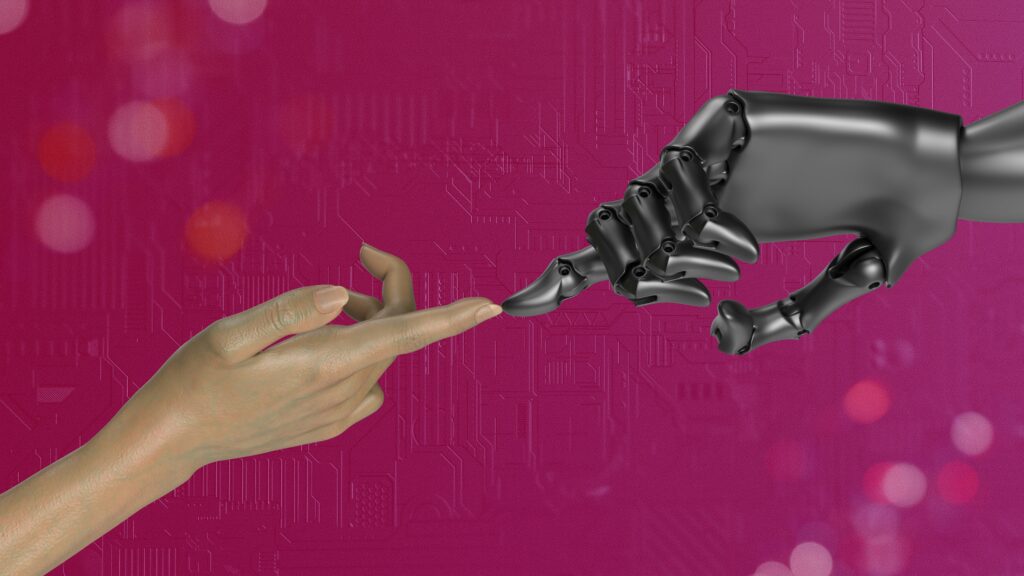
Every so often, an idea surfaces that stops you mid‑stride. One such idea, from a recent report in The Telegraph, suggested that books created entirely without artificial intelligence (AI) might one day come to be viewed as luxury items.
It’s a striking notion, like so much about the relentless advancement of AI, and an idea that has particular resonance for personal, human-told stories. The true luxury, however, will not be the rarity of human-authored works but the deeper value behind that phenomenon – specifically the time, attention and simple humanity that is invested in crafting a life story by hand. It is the slow, careful shaping of memories, the artful crafting of phrases and the patient weaving of meaning that elevate a memoir beyond mere ‘output’.
In today’s age of instant text generation, the act of creating a book by hand becomes not just a method but a statement: that a life is worth the time it takes to honour it.
The rise of automation
Artificial intelligence isn’t just transforming the creative industries; it’s reshaping them from the ground up. Content in many branches of the media is now being produced rapidly, cheaply and on an unprecedented scale. However, while this process can serve a purpose, it diminishes one of the most fundamental factors for giving a story its resonance: the human connection.
It is here that memoirs stand apart. A memoir is one of the few remaining forms of writing that cannot, and should not, be automated.
Human storytelling is essential
We all know that machines can generate words, and AI has the ability to churn out thousands of them in a very short space of time. Great! But let’s think about what AI cannot do. AI cannot interpret a sigh. It can’t recognise the hesitation before the revelation of a painful memory or understand the significance of a quiet moment that can reshape an entire story. It can’t sense the emotional weight behind a pause that lingers a second too long or follow the unspoken threads of a story as its teller bobs and weaves their way toward a difficult truth.
In contrast, human storytelling provides:
- Emotional awareness
- Nuanced listening
- Empathy
- Intuition
- The ability to read subtext and silence
The memoir as a human exchange
These are not mechanical processes; they are relational ones. You see this vividly in the making of memoirs and private autobiographies, where the entire project rests on conversation. At its core, the storyteller recounts while the interviewer and ghostwriter listen and then act on the subject’s memories. The narrative develops through shared interaction.
Through such intimate connection, hidden stories can be uncovered and memories sharpened in the telling. The narrative, as a result, becomes textured, authentic and more complete. It is dialogue and exchange that makes the memoir process uniquely powerful and which is impossible to replicate using questionnaires or automated prompts.
It can be said that a memoir is not merely written. It is witnessed.
The role of a dedicated ghostwriter
Central to keeping the writing of memoirs in human hands, of course, is the ghostwriter. A ghostwriter does far more than just record events. They interpret meaning, identify themes and continuously develop and refine the narrative, while all the time preserving the storyteller’s voice.
A skilled ghostwriter brings:
- The ability to render complexity with clarity
- A story that is deeply informed by human judgement
- Sensitivity to the storyteller’s tone and rhythm
- Respect for personal truth
- Judgement about structure and pacing
We need human attention
This human-led memoir-writing process allows for thoughtful questioning, careful handling of sensitive material, recognition of interwoven family dynamics and the space for assisted reflection and emotional processing.
This matters because people’s stories are rarely linear. They are marked by nuance, by memories that reveal themselves through layered complexity and by emotional depth. They deserve to be treated with dignity, to be understood rather than just recorded, and they require the presence of someone who can listen actively and respond with empathy.
The luxury of time, care and conversation
For this to be possible, time has to be found, but modern life moves at a pace that leaves little room for reflection. The modern-day ‘need for speed’ perhaps goes some way towards explaining the popularity of AI. But without deliberate and considered preservation, memories fade and the threads that connect generations start to unravel.
In an era in which so many of us live frantic, demanding lives, the memoir process offers undivided human attention. This is luxury in its truest form, with time spent honouring the life lived, care given to shaping a legacy and conversation that brings meaning and intent to the words on the page.
A memoir is a tangible expression of this process, created not by unseen automation but through genuine connection and the noble graft of human hands.
The future of storytelling
Human-crafted memoirs serve as an anchor. They slow us down and remind us of our own, and our family’s, continuity, identity and belonging.
As automation accelerates, human-crafted memoirs will become ever more distinctive. A memoir shaped through conversation and written with care will stand as a personal heirloom valued not simply because it records a life but because it reflects how deeply that life was seen.
In the future, the most treasured books may be those created in the oldest ways – simply by one person listening to another.
Enduring value
Human stories matter because they connect us to our history, our families, our values and even ourselves. In a world that is being increasingly defined by automation, the decision to preserve a lifetime of experiences with such care is an act of dignity and legacy.
The books that we create at LifeBook Memoirs are not produced to be the next bestsellers but to serve as treasured gifts and heirlooms for family and friends. In the age of AI, we keep memoirs and private autobiographies distinctively human. We understand the importance of getting every story right, not only by having dates, names and key facts correct but by ensuring your memoir sounds as natural as if you were reading it aloud.
Your story deserves that level of personal, human care. Together, we can create something to be treasured for generations to come.
To find out how a LifeBook project works, click here.

Written by Stephen Pitts, LifeBook Memoirs editor