The experience of memoir
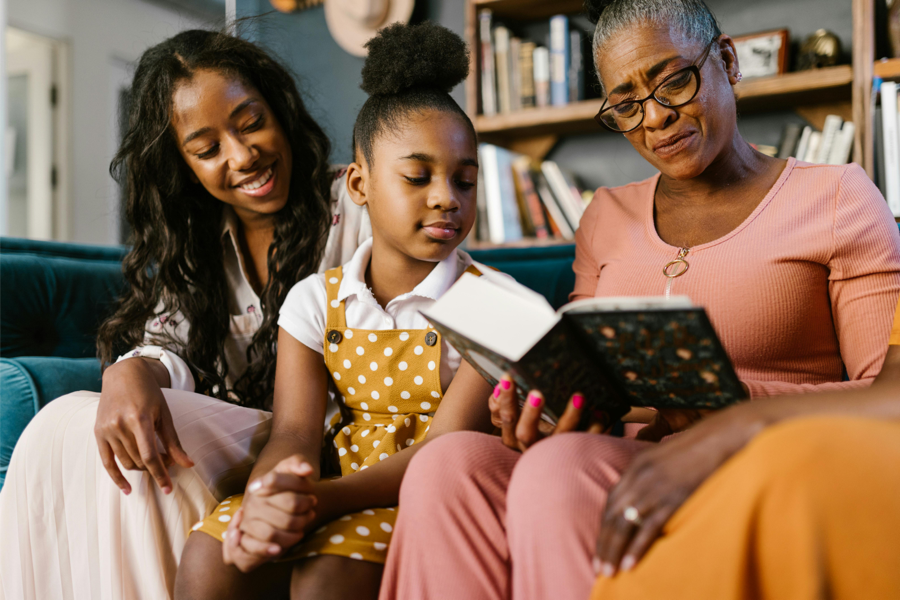
While a memoir is certainly a book about someone’s life, it is so much more than just a book. It is an invitation to discover the world of another person: their formative experiences, their hopes and fears, their perspectives and their values. It is a beautiful gift of the past to the present and the future.
Memoir is undoubtedly one of the twenty-first century’s most popular literary genres. Bookshop shelves, whether real or virtual, are packed with the life stories of the worthy, the famous and the infamous. All offer a window into the life of another person.
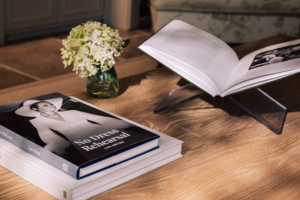
In her sometimes raw but often very funny memoir, Kids, Wait Till you Hear This!, Liza Minnelli seeks to set the record straight on her much-reported and misreported past and to reflect on a life lived in the full glare of a prurient media gaze. Gisèle Pelicot, in her deeply moving A Hymn to Life: Shame Has to Change Sides, bravely faces down this kind of intrusive fascination, instead offering hope and a new conception of shame. The books in which these extraordinary women relate the events that have shaped their lives, although very different, are far more than just bound collections of stories; they are invitations into the experiences and perspectives of another. They are intimate and compelling, thoughtful and inspiring, and in sharing singular lives, they build human connection and compassion. Both to write and to read memoir is to shape how the life it describes is understood and remembered. It is an experience.
New perspectives
Minnelli’s and Pelicot’s memoirs are often shocking, but perhaps the more powerful insight to take away from them is that the act of storytelling in a memoir, the act of reflecting on the past, provides clarity and perspective on a person and the world they inhabited, both for the reader and the author.
The value of a memoir is thus not only in the complete work but in the act of composing it, and writing a memoir and all the gifts of reflection that it offers isn’t the preserve only of the famous. Anyone can do it, and everyone has a life worth contemplating and setting down on paper.
In what Thomas Larson describes as a “meeting between a past self and a present self”, the act of recollecting, organising and meditating on your life, of deciding what should be written about and what should not, enables you to review your past. Perhaps your present self will find in your memories and documents a past self you were too busy living your life to perceive at the time. Perhaps you will discover where the moments of significance were, or those of real joy or poignancy.
A memoir is, in the end, a recounting of memories and a blending of facts with subjective experience. In revisiting and reflecting on these experiences, you might find their full meaning, and their place in your personal legacy might be discovered.
Memories can be fickle, and they tend to live in your mind as a disconnected straggle of often partially recalled events, people, emotions and sensations. You may have been sharing your stories with friends and family verbally for years, but the verbal recounting of an anecdote leaves plenty of space for all the things that don’t quite tie up to get away in the smoke of your audience’s willingness to go with the spirit of the story rather than its particulars.
Writing, however, requires greater precision and clarity, and in committing your memories to paper, you view them anew and interrogate them more carefully. In so doing, it becomes possible for you to clarify and bring some order to them and to make connections between past moments in ways that perhaps you couldn’t before. The process of writing will bring new memories to mind and help you understand why you felt the way you did about a particular circumstance or why you made the choices you did.
The writing of a memoir is, in this way, far more than simply the setting down of the story of your past. Although many of us may feel we don’t have an interesting story to tell, in examining our lives we will find that we are more as individuals than a factual rendition of dates and achievements. The process of writing a memoir is instead a means of discovering the nuance and emotional richness of your lived experience and of discovering – and maybe coming to terms with – the emotional and intellectual architecture of your life.
A life that is lived fully often leaves little time for thinking about what it takes to live in such a way. Writing your memoir in later life is a way to create the space to reflect on those busier years and to recognise the effort and resilience necessary to just keep going. For your family, the story they find in the pages of your memoir may strike different chords. The setting out of your achievements alongside their discovery of your interior world will be an intimate and deeply personal encounter with aspects of your life that may previously have been entirely unknown to them. They can appreciate everything you have done, whether large or small, and, at the same time, honour all the human moments in between. For a family, reading the memoir of a loved one and understanding their struggles and accomplishments functions as a kind of tribute to that person.
The gift of the past
History books record the vast and consequential events and prominent figures of the past, but the past is also the story of countless unheralded daily lives, each of them consequential and significant in their own way. These less well-known lives are often found in the pages of memoirs, a genre the Victorian novelist and poet George Meredith described as “the back stairs of history”. It is possible that Meredith thought nothing of any import happened in what were, to him, the unseen parts of the house, but on those back stairs are the stories of people like you and me, and of our parents and grandparents, and those stories matter.
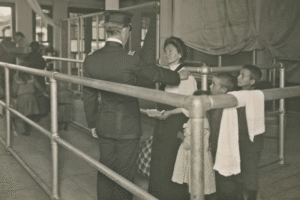
So many of us have wondered, once our parents and grandparents have gone, how it was that we failed to ask them questions about themselves. We realise we don’t know how they met, what our mother did in the Second World War or how our grandfather, an impoverished draper’s assistant, came, somewhat mysteriously, to be in a photograph taken in Leningrad in 1932.
Our forebears’ stories might be lost to us, along with our understanding of what the world was like for them or what their struggles and joys were, but we can still ensure that our own children and grandchildren know something about our lives by writing all our stories down for them. Perhaps, if we set everything we want to say down in a memoir, they will find out what happened on their own family’s back stairs!
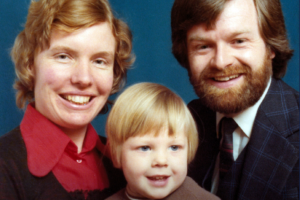
You can tell your children about, say, growing up in an industrial town in the 1970s, the enormous manual typewriter you used in your first job as a secretary, explain why you made the choices you did, that your mother thought pasta too exotic for weekday suppers. In the minutiae of your days, among all the big events and the unseen moments of your past, your memoir can be a source of connection for the generations that follow you.
Famously, L.P. Hartley opened his 1953 novel The Go-Between with “The past is another country; they do things differently there”. To anyone born in the twenty-first century, their great-grandparents’ childhoods in the 1940s and 1950s, lacking in central heating, social media and smartphones, seem a strange and primitive era – more of another planet than another country. What did people do all day? How did they find anything? Why didn’t they have double-glazed windows?
A memoir can answer these questions. It speaks across the decades of playing in streets free of cars and of long-distance love conducted slowly but romantically by letter. For today’s high-speed world, there is profundity in a vision of lives lived slowly and with far fewer material possessions. At the same time, the resilience required to achieve something out of very little, or the difficulties of getting by throughout years of wartime and post-war rationing, might encourage a twenty-first-century reader to reflect on the comforts and privileges they take for granted. A glimpse into the past in the pages of a memoir can offer wisdom and inspiration, and presenting it as lived experience can transform it from distant irrelevance to meaningful reality. A memoir is, Paula Fass says, a means of “capturing time”, and in your own memoir, you can capture your children’s history.
A unique legacy
Most households contain at least a few items that have been passed down through the family – photographs from the early twentieth century, Granny’s recipe book, an ugly ornament held in affectionate regard – and these are treasured heirlooms that, while they might have no financial value, are nevertheless part of a generational legacy. It is not their material existence that matters (certainly not in the case of that hideous silver-plate Victorian tea service) but their meaningfulness and the family bonds they exemplify.
Your memoir could become a family heirloom of almost unsurpassable value, an enduring record that travels far beyond your lifetime and touches the lives of family members yet to be born. In your own memoir, you can create a touchstone for your descendants as they make their way in the world, a sense of heritage and of belonging.
Everyone has their own story to tell, but writing a memoir can be a daunting experience and one that not everybody feels that they can achieve alone. Professional ghostwriters or memoir writing services such as LifeBook Memoirs can provide expert support and craftsmanship, helping you not just to write your stories but to craft a beautiful and bespoke memoir that your family will treasure down the generations.
Every memoir is a unique creation, representative of its author in its language choices, its tone, its choice of stories and photographs, its wisdom and thoughtfulness and its binding into a complete entity. To create such a thing for your family is to give them a precious gift, perhaps one of the most significant books they will ever own, for between its covers they will find meaning, legacy, connection and, most importantly, the love you have poured into making it for them.
Written by Kate Parry, LifeBook Memoirs editor